A good routine for 4C and coily hair comes down to five steps: a gentle wash every 7 to 14 days, a deep conditioning treatment, moisture applied in layers (water, cream, oil), a style that protects your ends and satin at night. Everything else depends on your hair’s porosity.
By Bianca Ponnusami, textured hair specialist · Published October 21, 2026
Curly, tightly curled and coily hair is all she does. Trained in Mauritius and Paris, Bianca works with women, men and kids in Montreal who want healthy hair that’s understood and looks its best.
4C hair is dry because sebum, the scalp’s natural oil, has a hard time travelling down such a tight coil. At every bend, the cuticle, the hair’s protective outer layer, lifts slightly and lets water escape. It isn’t a flaw: it’s simply how a tight curl works.
Read more
That’s also why your ends, the oldest part of each strand, are usually the most fragile. They have received the least sebum and gone through the most friction.
So a 4C hair routine has one simple goal: get water in, then keep it there. Everything else, from the products you choose to the way you protect your hair at night, follows from that idea.
My hair has never looked as beautiful as it does with Bianca! I’ve been to several places, and this is by far my best experience. (…) She brought my curls back to life and gave me a gorgeous cut!
★★★★★
Mia B.Google review · Cut · translated from French
“
A true professional who takes her time. Not just to cut your hair but also to explain how it behaves and what it needs. You leave with a better understanding of your hair and a beautiful cut.
★★★★★
Nathalie C.Google review · Cut · translated from French
“
Bianca created exactly what I had in mind for my hair, and even went beyond my expectations! The highlights are stunning and the result shows off my curls perfectly, without changing their nature.
★★★★★
Lisa B.Google review · Balayage · translated from French
Book
Learn your routine at the studio
In Montreal, Bianca shows you the right techniques on your own hair, and you leave with a clear routine.
Consultationtake stock of your texture and your routine30 min $35
Coily hair is usually washed every 7 to 14 days with a gentle, sulfate-free shampoo. Between washes, a co-wash, meaning a wash with conditioner only, refreshes your curls without drying them out. If your scalp gets itchy or oily quickly, wash a little more often.
Washing too often strips away the little sebum that protects the length of your hair. Washing too rarely lets product, sweat and residue build up, and your scalp ends up itching.
Focus the shampoo on your roots and let the lather run down the length of your hair. Working in four to six sections also keeps tangles away while you rinse.
How do you moisturize 4C hair?
To moisturize 4C hair, apply your products in layers on hair that’s still wet: first water or a leave-in, then a moisturizing cream, and finally an oil or butter to seal everything in. That’s the idea behind the LOC and LCO methods, two possible orders for the same steps.
LOC stands for liquid, oil, cream. LCO stands for liquid, cream, oil. Both work: on thick, very dry hair, the LOC method often gives more softness, while on fine hair, LCO feels lighter.
Above all, remember that moisture means water. Oil only keeps it inside. Applied on its own to dry hair, it leaves hair dry, just shinier.
Between washes, a spray bottle of water and a little cream are enough to refresh your curls in the morning.
What’s hair porosity, and how do I test it?
Porosity is your hair’s ability to absorb water and then hold on to it. It depends on how open the cuticle is. Low porosity hair struggles to let water in, while high porosity hair lets it in and out very quickly. Knowing yours helps you choose the right products instead of piling them on.
The glass of water test: drop a clean, product-free strand into a glass of room-temperature water. If it’s still floating after a few minutes, your porosity is probably low. If it sinks quickly, it’s probably high. Somewhere in between, it’s medium.
This test is only a rough guide: product residue or surface tension can skew the result, and the same head of hair often has several porosities, higher at the ends than at the roots. Also pay attention to how long your hair takes to dry and how it absorbs products.
Porosity
Signs
What helps
Common mistake
Low
Water beads on the hair, products sit on the surface, drying takes a long time.
Lightweight products, gentle heat during treatments, lukewarm water.
Layering heavy butters and oils that build up.
Medium
Hair absorbs products and stays moisturized for a few days.
A consistent routine, without overdoing it.
Switching products too often.
High
Hair dries very fast, frizzes and breaks easily.
Rich creams, an oil or butter to seal, strengthening treatments.
Adding more heat and more colour.
The studio’s Signature Coaching starts with exactly that: a porosity test, done on your own hair, with Bianca.
What does low porosity hair need?
Low porosity 4C hair needs lightweight products and a little gentle heat so the cuticle opens and lets the treatment in. A warm towel or a heat cap while your mask is on is enough. Above all, avoid a buildup of heavy products that just sit on the surface.
Apply your treatments to thoroughly wet hair, in small amounts, and massage them in. If your hair feels heavy, dull or sticky, it’s usually a sign of too much product, not too little.
A clarifying wash every now and then, once a month for example, gives you a fresh start.
Want a routine made for your hair?
During Signature Coaching ($180), Bianca does a porosity test, a detox, a treatment and a step-by-step curl definition with you, so you know how to repeat every step at home. The Signature Experience ($215) adds a cut and a PDF routine sheet to take home.
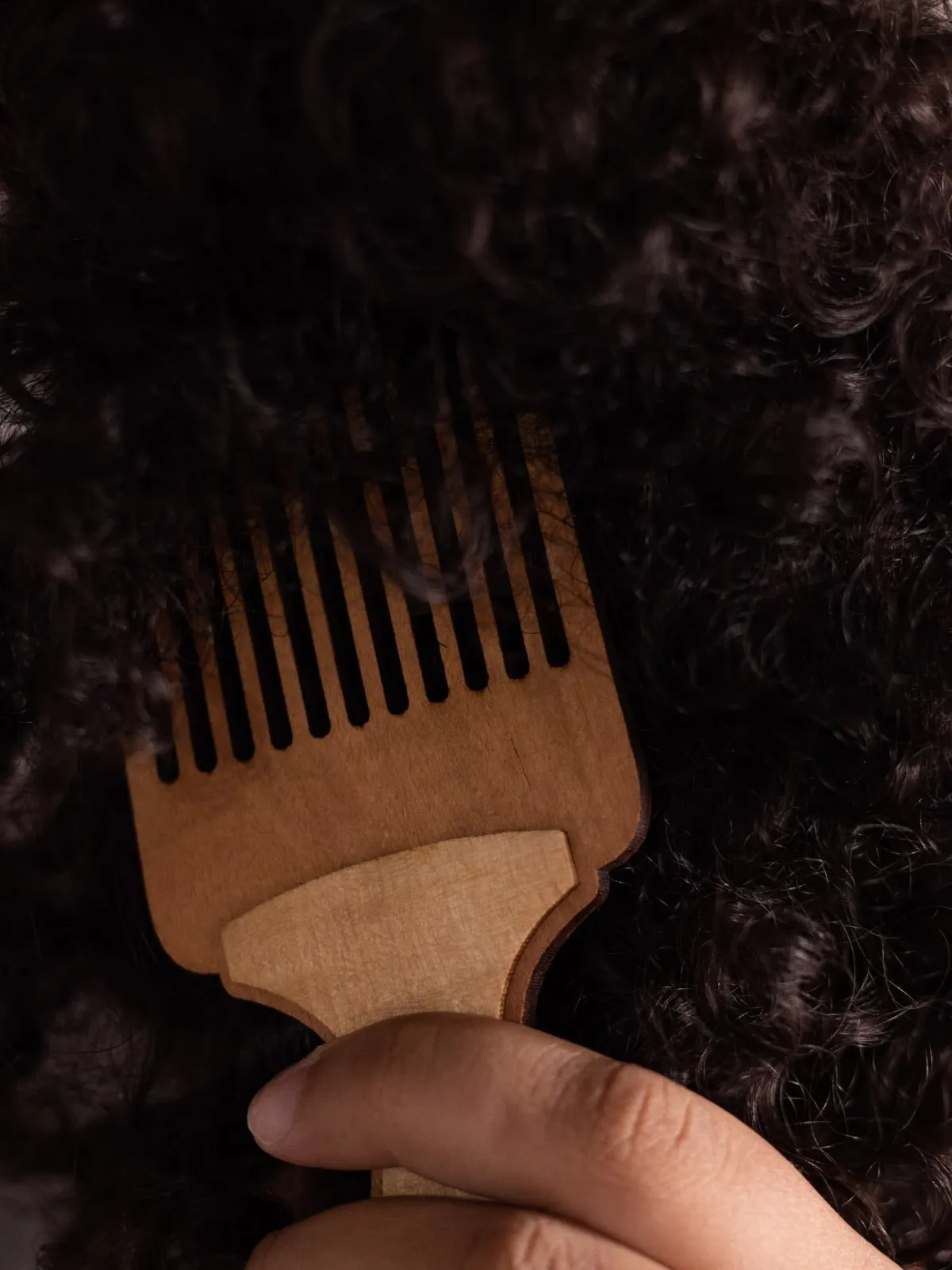
Always detangle 4C hair when it’s wet and coated in conditioner, in small sections, starting at the ends and working up to the roots. Fingers first, then a wide-tooth comb. Detangling dry, or from the top down, rips hair out and makes your ends break.
Take your time: a rushed detangling session does more damage than a week without combing. The hair that comes out while you detangle is normal: it’s hair that already shed over the past few days and got caught in your curls.
Detangling in the shower, with conditioner still in, is often the easiest. Keep each section clipped or braided as you go.
Which oil is best for dry 4C hair?
For dry 4C hair, oil is there to seal in moisture, not to moisturize. Light oils such as jojoba or grapeseed suit fine or low porosity hair. Richer oils and butters, such as castor oil, avocado oil or shea butter, suit thick, high porosity hair.
Apply a few drops, always on damp hair and after your cream, focusing on the ends. Go easy on the scalp: too much oil can clog and irritate it.
Protein or moisture: how do I know what my hair needs?
Try the elasticity test: gently stretch a wet strand. If it stretches a lot, doesn’t bounce back and feels mushy, it probably needs protein. If it snaps almost right away and feels dry and rough, it needs moisture. If it stretches a little and then returns to its shape, the balance is right.
Most 4C and coily hair mainly needs moisture. Protein treatments are useful from time to time, after colour or when hair turns limp, but used too often they leave hair stiff and brittle.
Does cold weather damage coily hair?
Yes, winter in Montreal is hard on coily hair: cold, dry air outside, indoor heating and the rubbing of wool toques dry out and break the ends. Adjusting your routine for a few months is all it takes to get through the season without breakage.
Line your toque with satin, or wear a satin cap underneath.
Deep condition more often, once a week in winter.
Keep your ends tucked away: twists or a low bun.
Consider a humidifier in your bedroom.
Why doesn’t my 4C hair grow?
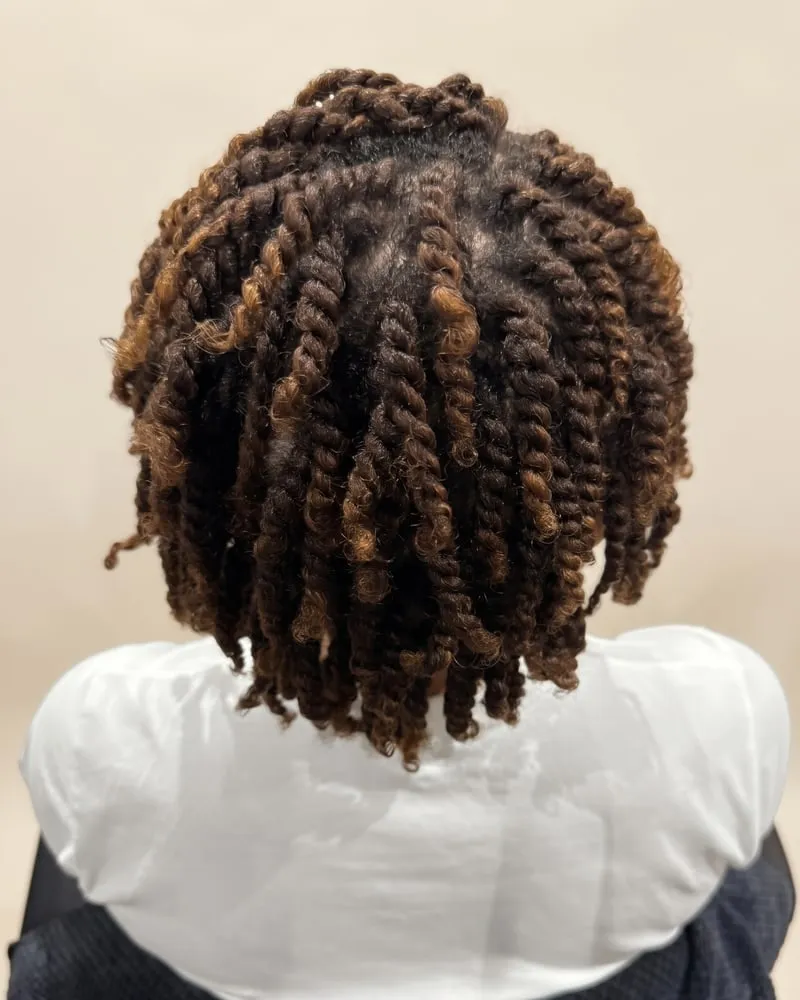
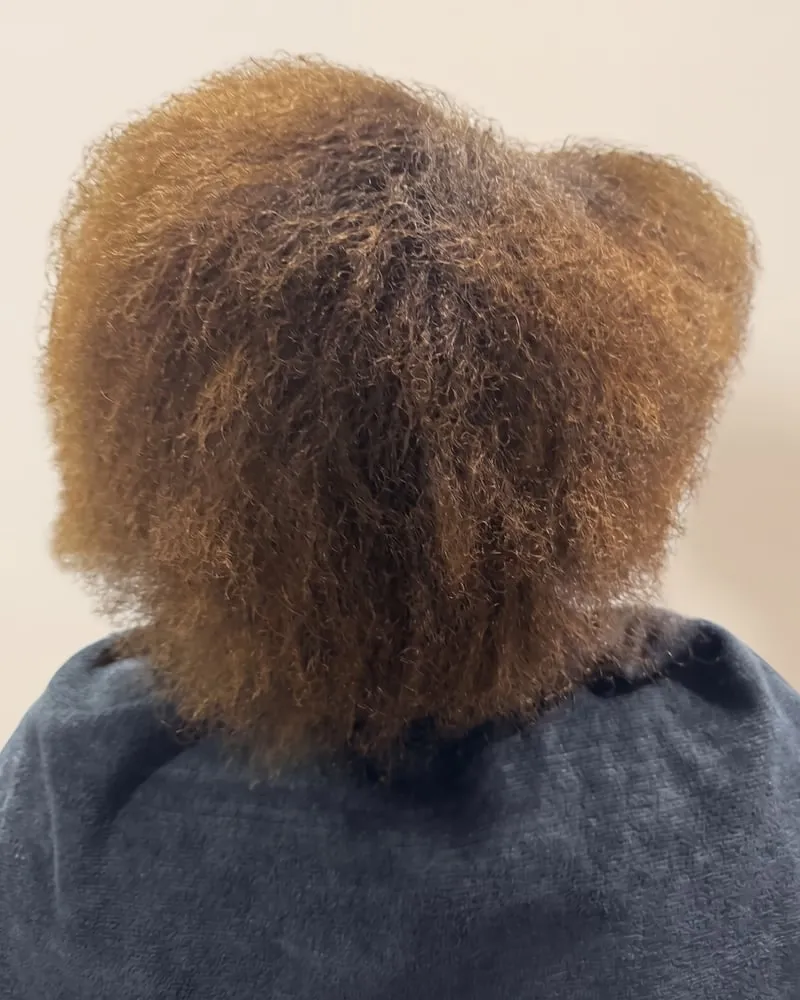
Your 4C hair does grow, about one centimetre a month on average, just like any other hair. If it never seems to get longer, it’s breaking at the ends as fast as it grows, or shrinkage, which can reach 70% of its length, is hiding how long it really is.
To keep your length, you need to protect your ends: moisture, gentle detangling, protective styles and satin at night. A regular trim, every 8 to 12 weeks, removes damaged ends before the splits travel further up.
How do I protect my hair at night?
At night, protect your coily hair with a satin bonnet or pillowcase: unlike cotton, satin doesn’t soak up moisture or rub against your curls. Gather your hair into a pineapple, a loose ponytail on top of your head, or into big twists.
In the morning, a little water and cream on the flattened areas is often enough to bring your curls back, without starting over.
A typical weekly routine
Wash day: gentle shampoo, deep conditioning, detangling, layered moisture, styling.
Days 2 to 6: a little water and cream on your ends in the morning, if needed.
Midweek: a co-wash or a refresh, depending on how your scalp feels.
Every night: pineapple or twists, satin bonnet.
Should I exfoliate my scalp?
A scalp scrub is helpful if you notice itching, flakes or product buildup. Once a month is usually enough. At the Montreal studio, the scalp detox exfoliation takes 35 minutes and costs $45.
A clean, clear scalp is the foundation of healthy growth. Be gentle: scrubbing too often or too hard irritates instead of soothing.
How long before a new routine shows results?
Give a new 4C hair routine 4 to 8 weeks before you judge it. Your hair needs several wash days to regain moisture, and the benefits of less breakage only show over time. Consistency matters more than the number of products you use.
Keep track of what you do and how your hair responds: it’s the best way to spot what truly works for you.
Would you like some guidance?
During Signature Coaching ($180), Bianca does a porosity test, a detox, a treatment and a step-by-step curl definition with you, so you know how to repeat every step at home. The Signature Experience ($215) adds a cut and a PDF routine sheet to take home.





 Mia B.Google review · Cut · translated from French
 Nathalie C.Google review · Cut · translated from French
 Lisa B.Google review · Balayage · translated from French